







Mini Dumper Guide: Compact Material Handling for Demanding Jobs

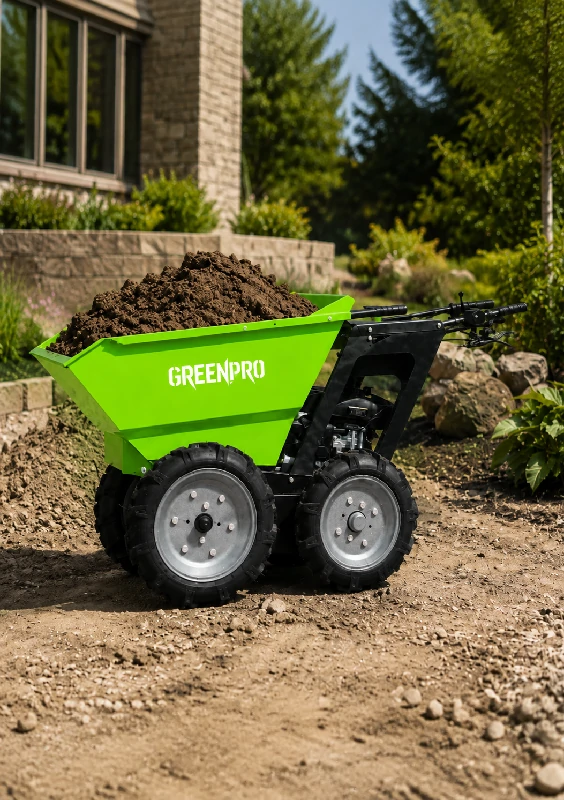
A mini dumper is a compact material-handling machine designed to transport soil, gravel, rubble, timber, tools, and other heavy loads across worksites where larger vehicles cannot operate efficiently.
Thanks to its small footprint, strong load capacity, and excellent traction, a mini dumper is suitable for construction, landscaping, agriculture, forestry, renovation, and property maintenance.
What Is a Mini Dumper?
A mini dumper is a smaller and more manoeuvrable alternative to a conventional site dumper. It is commonly used in narrow access areas, gardens, building sites, farms, woodland, and uneven terrain.
Most models are equipped with either tracks or wheels. Tracked mini dumpers are especially effective on soft ground, slopes, mud, gravel, and rough surfaces because the tracks distribute the machine’s weight and provide improved grip.
Depending on the model, the tipping system may be manual, hydraulic, or electric.
Typical Applications
Mini dumpers can be used for a wide range of transport tasks, including:
- Moving soil, sand, gravel, and concrete
- Carrying bricks, stones, and construction waste
- Transporting firewood, logs, and garden materials
- Supporting landscaping and groundworks
- Working in narrow passages and confined spaces
- Moving equipment around farms, estates, and building sites
Their compact design makes them particularly useful when access is restricted or when manual handling would be slow, tiring, or unsafe.
Petrol and Electric Mini Dumpers
Mini dumpers are generally powered by either a petrol engine or an electric motor.
Petrol Mini Dumpers
Petrol-powered models are suitable for demanding outdoor work and longer operating periods. They normally provide strong climbing ability, good payload capacity, and reliable performance on difficult terrain.
Electric Mini Dumpers
Electric models offer quiet operation, low emissions, and reduced maintenance. They are well suited to residential areas, indoor projects, greenhouses, warehouses, and other environments where noise and exhaust emissions should be minimised.
The most appropriate option depends on the working environment, load requirements, operating time, and access to charging facilities.
Why Choose a Tracked Mini Dumper?
Tracked machines provide several practical advantages:
- Improved traction on loose or uneven ground
- Better stability on slopes
- Reduced ground pressure
- Easier movement through mud and soft soil
- Reliable operation in narrow or difficult areas
However, safe operation always depends on the gradient, load distribution, surface conditions, and the manufacturer’s specifications.
Main Features to Consider
When selecting a mini dumper, consider the following factors:
Payload Capacity
Choose a machine that can safely carry the type and weight of material required. Avoid selecting a model based only on maximum capacity; the machine should also remain stable and easy to control.
Dumper Body
Different body types are available for soil, rubble, timber, and general-purpose transport. Some models offer extendable sides or flatbed configurations.
Tipping System
Manual tipping is simple and economical, while hydraulic tipping reduces physical effort and improves productivity when handling heavy materials.
Transmission and Speed
The number of forward and reverse gears affects control, climbing performance, and manoeuvrability. Variable-speed or hydrostatic systems may offer smoother operation.
Machine Width
For projects involving gates, doorways, paths, or narrow access points, confirm the overall machine width before purchase.
Braking and Safety Controls
Look for reliable brakes, an emergency stop, accessible controls, and automatic stopping functions where available.
Safe Operating Practices
A mini dumper can reduce manual handling, but it must be operated responsibly. Before use, inspect the work area and the machine.
Before Starting
Check the brakes, tracks or tyres, fluid levels, controls, tipping system, and visible fasteners. Confirm that the route is clear and that the machine is suitable for the ground conditions.
Wear appropriate personal protective equipment, including safety footwear, gloves, eye protection, and suitable work clothing.
During Operation
Keep colleagues, bystanders, children, and animals away from the operating area. Drive at a controlled speed and avoid sudden turning, braking, or tipping.
Distribute the load evenly and do not exceed the rated payload. On slopes, follow the operating instructions provided by the manufacturer and avoid working across steep gradients unless the machine is specifically designed for it.
During Inspection or Maintenance
Stop the engine or electric motor before inspecting, cleaning, adjusting, repairing, or changing attachments.
Never place hands or tools near moving parts while the machine is running. Allow hot components to cool before maintenance.
Worksite Hazards
Before operating a mini dumper, check for hazards such as:
- Overhead or fallen power lines
- Underground cables and pipes
- Unstable edges, trenches, or excavations
- Loose surfaces and hidden obstacles
- Steep slopes
- Restricted visibility
- Pedestrian traffic
Utility markers and warning signs should always be taken seriously. Where underground services may be present, confirm their location before work begins.
Final Thoughts
A mini dumper is a practical solution for moving heavy materials in areas where wheelbarrows are inefficient and larger machinery is unsuitable.
By selecting the correct machine, inspecting the worksite, and following safe operating procedures, users can improve productivity while reducing physical strain and material-handling risks.
For construction, landscaping, agriculture, and property maintenance, a well-chosen mini dumper can become one of the most useful machines on the job.